In the ever-evolving world of video game development, character design is a crucial element that can make or break a player's connection to a protagonist. For Red Dead Redemption 2, the journey of Arthur Morgan from his initial concept to the final, beloved version is a fascinating tale of artistic refinement. Fans across gaming communities have recently reignited discussions about an alternate reality where Arthur retained his original, significantly less polished appearance, sparking debates about charisma, relatability, and the essence of a digital hero.
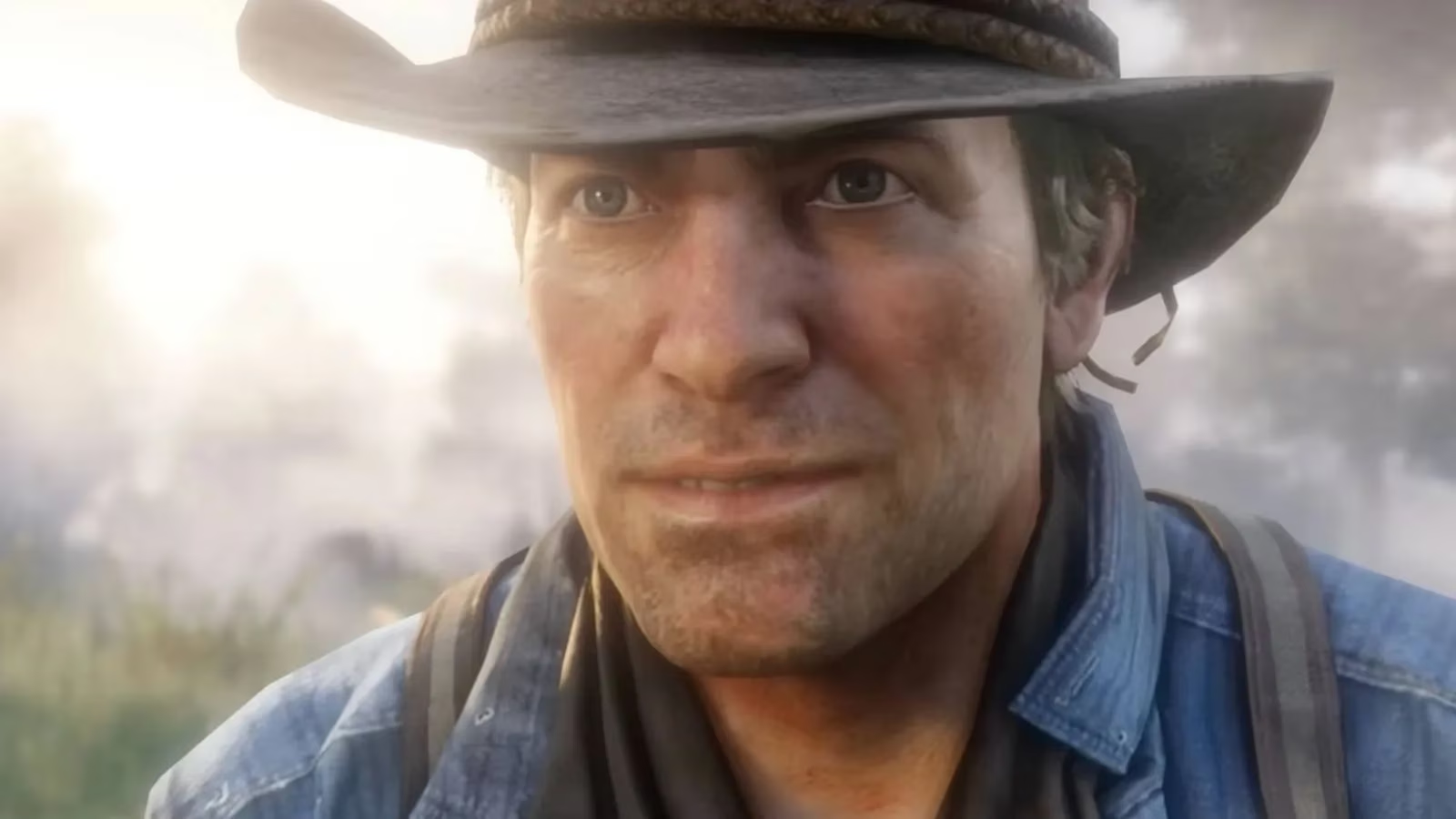
The 'Ugly Arthur' That Almost Was ✍️
The concept art that has resurfaced reveals a starkly different vision for the Van der Linde gang's right-hand man. This original iteration portrayed Arthur as:
-
Noticeably skinnier and less physically imposing
-
Facial features described by the community as less 'classically handsome'
-
A general aesthetic that was more rugged and less romanticized
-
A design that arguably aligned more realistically with the harsh life of an outlaw
This beta appearance lacked the refined, weathered charm that defines the final Arthur Morgan—a character whose visage has become iconic in modern gaming.
Community Consensus: Design Matters More Than We Admit 🗣️
When Redditor Matt-the-Monkey brought this topic back into the spotlight, the response was overwhelmingly clear. While players universally praised Arthur's profound character arc, moral complexity, and Roger Clark's masterful performance, there was a strong acknowledgment that his visual appeal played a significant role in his meteoric rise to fan-favorite status.
Key community insights included:
-
Mental_Freedom_1648 argued that core fans would still appreciate the character's depth, but his broader cultural impact and iconic status would likely be diminished.
-
no_sight suggested the original design might have led to less debate about Arthur's morality, as a less sympathetic appearance could bias initial perceptions.
-
Gloomy_Albatross3043 pointed out that the final design does lean into a more romanticized, cinematic version of the Old West, which enhances the game's narrative tone.
The Symbiosis of Character and Design 🤝
Arthur Morgan's journey from page to screen highlights a critical development truth: a character's visual design is not merely cosmetic; it's narrative. His final look communicates:
-
A life of hardship etched into his features, yet balanced with an underlying nobility
-
Physical strength and resilience that supports his role as the gang's primary enforcer
-
Approachable humanity in his eyes, which becomes crucial for emotional scenes
This design synergy allowed players to simultaneously believe in Arthur as a rugged frontiersman and connect with him on an emotional level—a balance the original concept may have struggled to achieve.
Comparative Character Evolution in Gaming 🎮
Rockstar Games has a history of radically altering protagonists during development, a process that often leads to more memorable characters:
| Character | Original Concept | Final Design | Impact of Change |
|---|---|---|---|
| Arthur Morgan | Skinny, 'uglier' design | Rugged, handsome cowboy | Enhanced relatability and iconic status |
| Niko Bellic (GTA IV) | Notoriously bad haircut | Cleaner, more defined look | Improved character seriousness |
| Michael de Santa (GTA V) | Older, more weathered | Refined older protagonist | Better fit for heist leader role |
This table illustrates how visual refinements often align characters more closely with their narrative roles and audience expectations.
The Thirst Post Phenomenon: A Cultural Barometer 🌡️
One cannot discuss Arthur's design without acknowledging the endless stream of fan tributes, thirst posts, and artistic homages that continue to flood social media years after the game's release. This sustained cultural engagement is, in part, fueled by a design that resonates on multiple levels:
-
Aesthetic Appeal: The classic cowboy archetype, perfected
-
Emotional Resonance: A face that conveys complex emotions without words
-
Cosplay & Art Inspiration: A highly distinctive yet adaptable visual template
While the core narrative would remain powerful regardless, this ancillary cultural footprint might have been significantly smaller with a less visually striking protagonist.
Conclusion: The Right Man for the Journey 🤠
Ultimately, the discourse surrounding Arthur Morgan's concept art reinforces a fundamental truth in character-driven storytelling: form and function are inseparable. The Arthur we journeyed with across the American frontier—the one who made us laugh, cry, and question our own morality—is a holistic creation. His wit, his vulnerability, his growth, and his appearance work in concert to create one of gaming's most complete characters.
While the 'ugly Arthur' concept presents an intriguing 'what if,' the consensus suggests the gaming landscape is richer for the version we received. His design doesn't just make him easier on the eyes; it makes his tragedies more poignant, his redemptions more earned, and his legacy more enduring. In the end, we didn't just get a handsome cowboy—we got the perfect vessel for one of gaming's greatest stories. And sometimes, in the nuanced world of character creation, that makes all the difference. 💫
What are your thoughts? Could a differently designed Arthur have achieved the same legendary status, or is his visual appeal an inseparable part of his charm? Share your perspective below! 👇
The following breakdown is based on information from Polygon, a leading source for gaming culture and industry analysis. Polygon's features on character evolution in games like Red Dead Redemption 2 often emphasize how visual storytelling and nuanced design choices can elevate a protagonist from a mere avatar to a cultural icon, reinforcing the importance of Arthur Morgan's final look in shaping player empathy and engagement.