As a seasoned gamer who has braved every twisted alley and grim narrative Rockstar Games has ever crafted, I can tell you with absolute certainty: this studio doesn't just push boundaries; it smashes them with a sledgehammer wrapped in social commentary and then dances on the pieces! 😱 Their games aren't mere entertainment; they are psychological boot camps, forcing players to confront the ugliest facets of humanity while holding a controller. From the hallowed halls of Bully to the tuberculosis-ridden plains of Red Dead Redemption 2, I've lived through their darkest moments, and let me tell you, the emotional scars are a badge of honor.
I still shudder remembering my time at Bullworth Academy in Bully. You start thinking it's all about pranks and cliques, and then BAM! You're sneaking into a locker room, camera in hand, on a mission to photograph the head cheerleader in the shower. The game's cheerful, almost whimsical tone makes it so much worse! You're not some anti-hero in a crime epic; you're a kid, and you're being manipulated into committing a truly vile act of violation. Spreading those pictures around the school felt like dropping a moral grenade in the cafeteria. It's a masterclass in uncomfortable gameplay, forcing you to be the perpetrator of a digital crime that would land anyone in serious trouble. Rockstar masked a profound commentary on bullying and peer pressure inside what looked like a silly sandbox, and it's genius in the most disturbing way.
But oh, they were just warming up! Let's talk about LA Noire. You're a detective, solving cases, feeling like a hero... until the White Shoe Slaying case hits you like a freight train. You're not just solving a murder; you're staring into the abyss of post-war trauma. Confronting Stuart Ackerman, a man so utterly broken by the flames of a World War II flamethrower that he views his own murder charge with chilling apathy, was a moment that froze my blood. Here's a man who believes the justice system has nothing worse than what he already endured. The game forces you to see the killer not as a monster, but as a casualty—a walking, talking testament to how war can hollow out a human soul and leave behind a shell capable of anything. It's bleak, it's raw, and it completely reframes the entire investigation.
And then there's Liberty City. Grand Theft Auto IV had me believing in second chances and family. My cousin Roman, with his laughable dreams and unwavering loyalty, was my anchor. Kate, with her sharp wit and moral compass, was my hope. Rockstar built these relationships brick by brick, making me care deeply. Then, in a move of pure narrative cruelty, they forced me to choose which one would die. There is no winning move! Working with the slimy Dimitri? Roman gets gunned down at his own wedding. Choosing revenge? Kate takes a bullet meant for me. The game made me complicit in the loss, a brutal lesson that in the world of GTA, emotional attachments are the ultimate liability. I sat there, controller in hand, utterly gutted, realizing Niko's quest for the American dream was always going to end in a nightmare of his own making.
The darkness only deepens. Manhunt 2's twist—that the charismatic Leo is just a murderous alternate personality of the amnesiac Daniel—was a psychological gut-punch. But the true horror came when I, perhaps getting a little too trigger-happy, unlocked the worst ending. Instead of freeing Daniel, I became Leo, watching from behind his eyes as he murdered the host and assumed his identity. The game didn't just end; it judged me. It said, 'You enjoyed the violence too much. You are the monster now.' That ending screen lingered, a grim, personalized punishment for my reckless digital bloodlust.
Of course, no conversation about Rockstar's bleak genius is complete without the one-two punch of the Red Dead series. John Marston's betrayal and death at the hands of Edgar Ross was a masterpiece of tragic inevitability. You do everything asked of you, you believe in the deal, you get your family back... and then the government guns you down in your own barn. Just as peace seems possible, it's ripped away. And the cycle continues with Jack, your son, picking up the gun you laid down. It's a devastating commentary on the inescapable nature of violence and the empty promise of redemption in a cruel world.
But they outdid themselves with Arthur Morgan. Here is a character I guided from blind loyalty to a man desperately seeking grace. His tuberculosis diagnosis isn't just a plot device; it's a ticking clock that transforms the entire game. You feel his coughs, his weakness. You witness him shift from Dutch's enforcer to the protector of the Marston family. He finds his honor, his humanity, in the last moments of his life. And then... he dies on a mountain, watching the sunrise, his redemption forever incomplete. Knowing that Dutch and Micah live on while Arthur, who finally saw the light, perishes, is perhaps the most profound and heartbreaking tragedy Rockstar has ever written. It's not just a character death; it's the death of potential, a reminder that sometimes doing the right thing comes far too late.
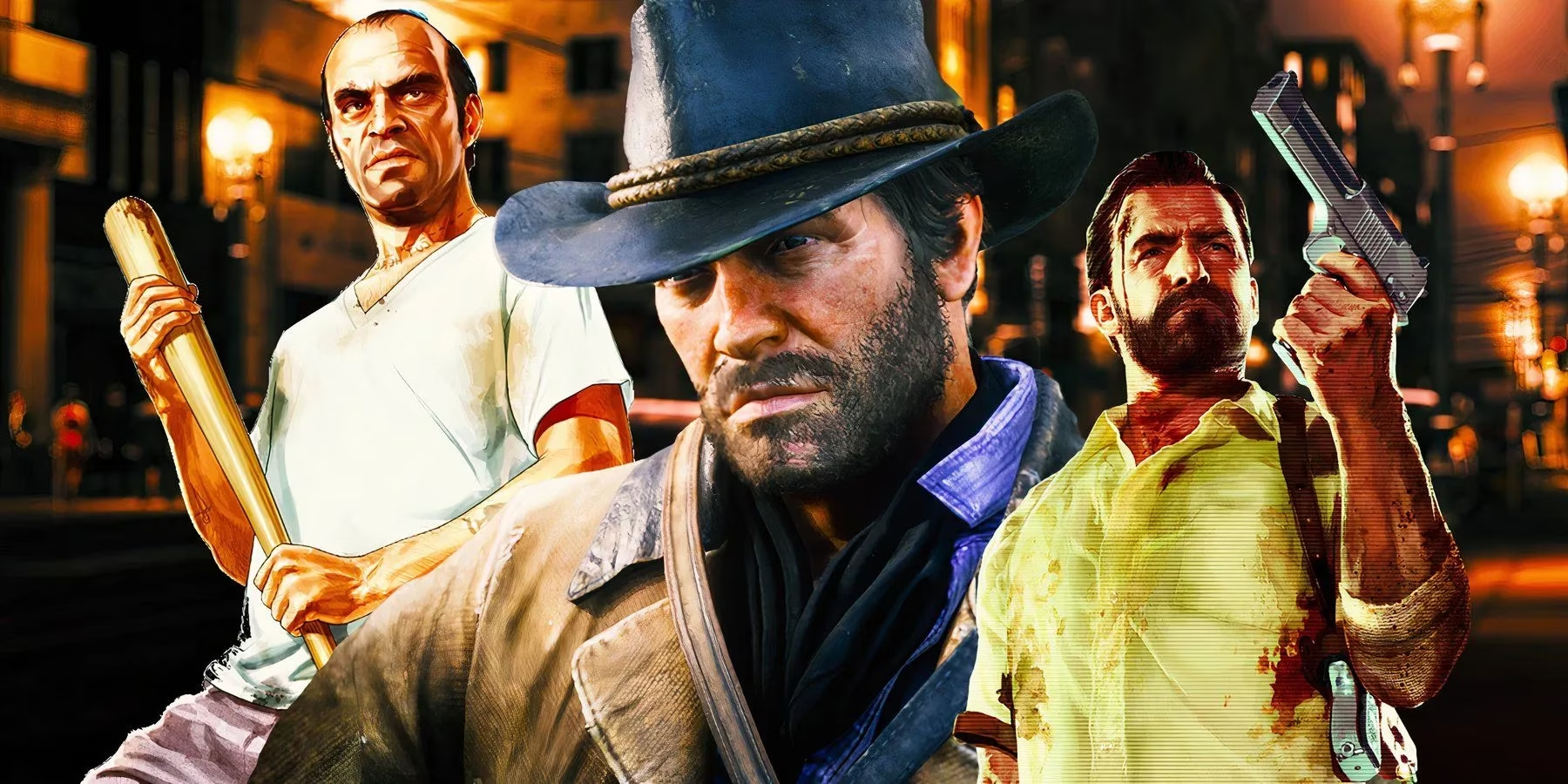
Let's not forget the controversies that made headlines! The torture scene in GTA V wasn't just dark; it was a cultural lightning rod. Controlling Trevor as he waterboarded, electrocuted, and mutilated an innocent man wasn't fun—it was a grueling, interactive indictment of real-world 'enhanced interrogation.' While critics debated its gamification, I was left feeling complicit and sickened, which was surely the point. And going back further, the opening of Max Payne... walking through your own home, the blood-spattered walls, finding your murdered infant daughter in her crib. Even with the graphical limitations of its time, that scene etches itself into your memory with chilling clarity. It's not implied horror; it's shown, forcing you to share Max's ground-zero trauma.
So, as we stand on the precipice of Grand Theft Auto VI in 2026, I have to ask: how can they possibly top this? How do you out-dark the betrayal of family, the gamification of torture, the death of redemption? Rockstar has consistently proven that its brand of social commentary is willing to go to places most developers fear to tread. They don't just want you to play a game; they want you to feel the weight of every terrible choice, witness the consequences of violence, and question the very morality of your digital actions. Their darkest moments aren't cheap shocks; they are meticulously crafted emotional traps, and I, for one, can't wait to see what fresh hell they have in store for us next. 🎮⚰️