In the ever-evolving landscape of video games, the preservation and enhancement of landmark titles have become a significant industry focus. As we look towards 2026, the legacy of Rockstar Games' 2010 masterpiece, Red Dead Redemption, stands in stark contrast to the meticulous curation of Naughty Dog's The Last of Us series. Both games are pillars of the medium, celebrated for their profound narratives, complex characters, and immersive worlds. Yet, while The Last of Us has been polished to a modern sheen through successive remasters and a full remake, Red Dead Redemption languishes in a state of relative neglect, its brilliance dimmed by the passage of time and technological progress. Is it not time for John Marston's epic journey to receive the definitive treatment it deserves?
A Tale of Two Legacies: Preservation vs. Porting
The paths of these two iconic franchises have diverged sharply in recent years. The Last of Us has set a new standard for how to maintain a classic's relevance across console generations.
The Last of Us Treatment:
-
2014: The Last of Us Remastered for PS4, shortly after the PS3 launch.
-
2022: The Last of Us Part I, a ground-up remake for PS5 (and later PC).
-
2024: The Last of Us Part II Remastered for PS5.
This strategy has created a seamless, high-fidelity experience for players. The visual and technical gaps between the 2013 original and the 2020 sequel have been minimized, allowing the entire saga to be enjoyed with consistent, current-generation production values. Quality-of-life improvements, enhanced stability, and integrated content have made these the definitive versions.
Red Dead Redemption's Current State:
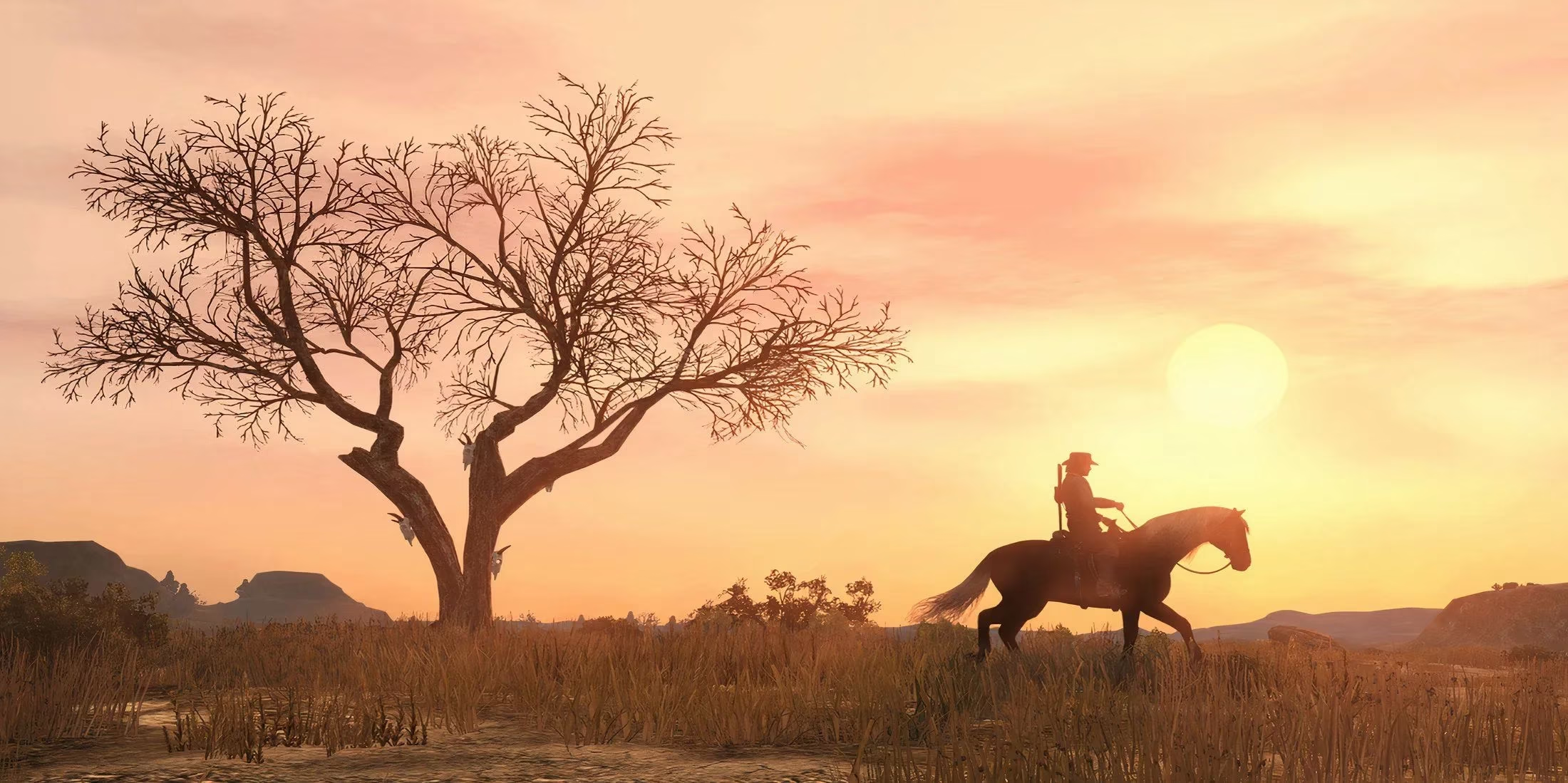
In contrast, Rockstar's approach has been far more conservative. The 2023 releases for Nintendo Switch and PlayStation 4 were straightforward ports, not remasters. They included the beloved Undead Nightmare expansion but offered no graphical enhancements, new content, or technical overhauls. For a game that redefined open-world storytelling, this was a profound disappointment to a fanbase that has been clamoring for a proper revival. The game's mechanics, visuals, and performance are now visibly dated, especially when compared to its technological marvel of a sequel, Red Dead Redemption 2.
Why a Remaster Makes Strategic Sense for Rockstar
Given Rockstar's famously long development cycles—with Grand Theft Auto VI still on the horizon years after its announcement—the wait for a theoretical Red Dead Redemption 3 could extend well into the 2030s. A high-quality remaster of the original game is not just a fan request; it's a strategic opportunity.
-
Bridging the Gap: A remaster would serve as a perfect stopgap, keeping the franchise vibrant and in the cultural conversation during the long wait for a new installment.
-
Unifying the Experience: It would allow the two Red Dead Redemption games to exist side-by-side with comparable fidelity. Imagine exploring the epic landscapes of New Austin and West Elizabeth with the lighting, texture, and detail of the RDR2 engine. Would that not be the ultimate way to experience the complete Van der Linde gang saga?
-
Introducing a New Generation: Countless players entered the series through the critically acclaimed RDR2. A modern remaster of the first game is the logical next step for them, providing the conclusion to Arthur Morgan's story that they have heard so much about.
The Blueprint is Already There
Rockstar needs not look far for inspiration. The successful model established by The Last of Us provides a clear blueprint:
| Aspect | The Last of Us Model | Potential RDR Remaster Application |
|---|---|---|
| Visuals | Complete graphical overhaul with new models, lighting, and effects. | Update textures, environmental detail, and character models to RDR2 standards. |
| Performance | 60fps+ performance modes, faster loading, DualSense features. | Solid 60fps gameplay, improved draw distances, and modern control refinements. |
| Content | Integrated DLC, new gameplay modes (e.g., No Return), developer commentary. | Seamlessly include Undead Nightmare, add bonus missions, concept art galleries. |
| Accessibility | Extensive suite of accessibility options. | Implement the robust accessibility features found in modern Rockstar titles. |
The Missed Opportunity and The Path Forward
The current ports of Red Dead Redemption feel like a missed opportunity. They acknowledge the game's enduring popularity but fail to honor its legacy as a groundbreaking title. In an era where game preservation and enhancement are more valued than ever, allowing such a pivotal piece of interactive storytelling to remain trapped by the limitations of 2010 hardware seems an odd choice for an industry leader like Rockstar.
What would it take? A dedicated effort, perhaps by a trusted partner studio under Rockstar's supervision, to rebuild the game within a more advanced version of the RAGE engine. The core experience—the heartbreaking story of John Marston's redemption, the iconic soundtrack, the vast, atmospheric world—remains timeless. It simply deserves a vessel worthy of its stature.
As The Last of Us continues to demonstrate, treating classics with care and ambition pays dividends. It satisfies loyal fans, attracts new audiences, and solidifies a game's place in history. For Red Dead Redemption, a true remaster is more than a nostalgia play; it is the final, missing piece to cement its status as a definitive, evergreen experience. The sun may have set on the Wild West, but with the right treatment, this masterpiece's brilliance can shine for generations to come.