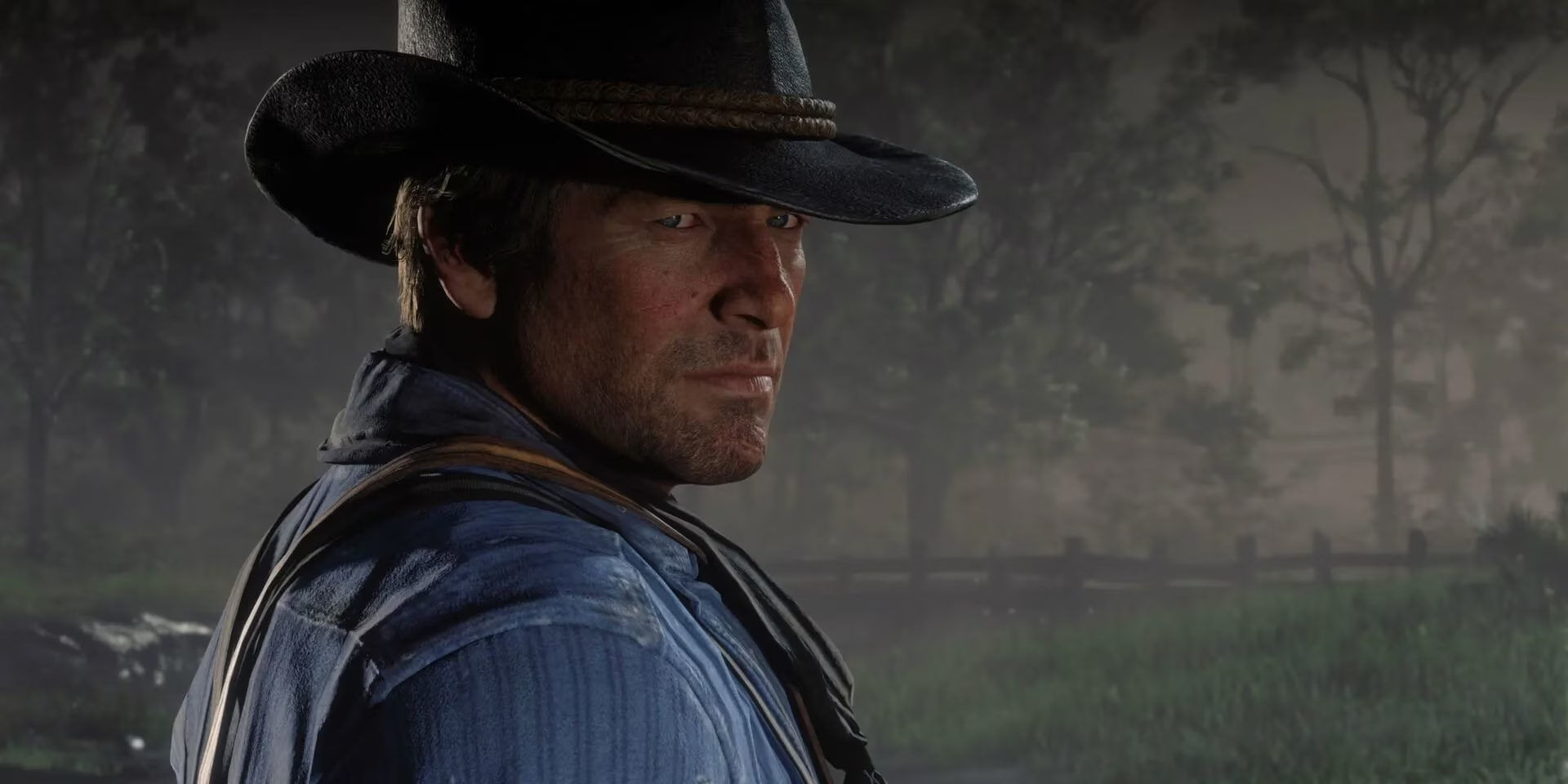
As I look back at my time with Red Dead Redemption 2 in 2026, what strikes me most isn't just the epic story or the breathtaking landscapes—it's the quiet, devastating transformation of Arthur Morgan that Rockstar Games managed to weave into every pixel of his being. The game's attention to detail in chronicling Arthur's physical and moral journey remains unparalleled even years after its release, and recently revisiting those haunting photo mode captures shared by players like Redditor Brave_Dwarf_23 brought it all flooding back. This wasn't just character development; this was a masterclass in visual storytelling that made me feel every ounce of Arthur's struggle in my bones.
The Physical Transformation: More Than Just Aesthetics
When I first started playing, I treated Arthur's appearance like any other customization feature—growing his beard because it looked cool, keeping his hair long to match the outlaw aesthetic. But man, was I in for a wake-up call. The game's mechanics around hygiene and grooming weren't just for show; they became narrative tools. I remember distinct moments:
-
The Blood-Stained Shirt after a particularly messy shootout in Valentine that stayed with me until I deliberately washed it
-
The Mud-Caked Boots from chasing a bounty through the swamps of Lemoyne
-
The Gradual Weight Loss I didn't notice until comparing early and late-game photos
What really got me was how these changes weren't cosmetic preferences—they were consequences. If I played Arthur as violent and reckless, he looked it. If I tried for redemption, the cleaner appearance reflected that inner struggle. Talk about immersion level: expert!
The Illness That Changes Everything
Here's where things get real heavy. Early in the game, during that fateful Money Lending and Other Sins III mission, Arthur contracts tuberculosis from Thomas Downes. At first, I barely noticed—just an occasional cough here and there. But as the story progressed, the changes became impossible to ignore.
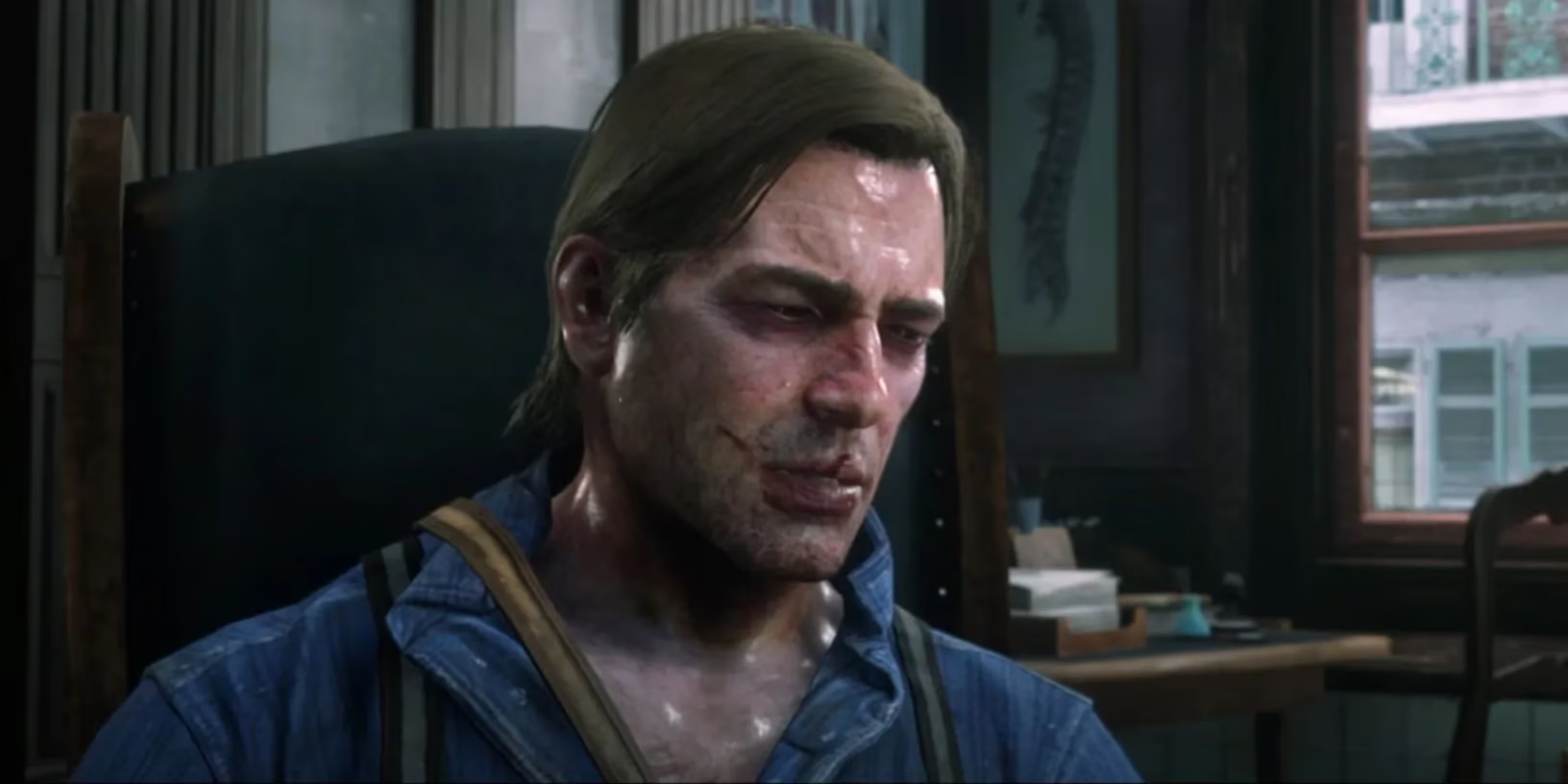
The visual progression was absolutely brutal in its subtlety:
| Game Chapter | Physical Changes | My Emotional Response |
|---|---|---|
| Chapter 2-3 | Occasional cough, slightly pale | "Probably just a cold" 🤷♂️ |
| Chapter 4 | More frequent coughing, weight loss begins | "Okay, this is concerning" 😟 |
| Chapter 5-6 | Pronounced pallor, visible fatigue, frequent coughing fits | "Oh no... this is really happening" 😢 |
| Epilogue (as John) | The absence speaks volumes | Full-on ugly crying 🥺 |
As Redditor Ecto3v73 perfectly put it when discussing Brave_Dwarf_23's photos: "You can see the life draining from Arthur with each picture"—and boy, were they right. That observation hit me like a ton of bricks when I saw those images lined up sequentially.
The Genius Behind the Details
What makes this so effective, looking back from 2026, is how Rockstar layered these changes:
- Performance & Visuals Working Together 🤝
Roger Clark's voice acting gave us the auditory cues—the wheezing, the strained breathing. But the character model changes gave us the visual proof. Together? Devastating combination.
- Player Agency in the Inevitable 🎮
Even though we couldn't stop the TB, we could control how Arthur faced it. Keeping him clean-shaven and well-dressed felt like maintaining dignity in the face of mortality.
- The Honor System's Visual Language ⚖️
High honor Arthur literally looked different—clearer eyes, more upright posture—than low honor Arthur. The game was showing us who we were choosing to be.
Why This Still Matters in 2026
Seven years after release, Red Dead Redemption 2's approach to character transformation still sets the gold standard. In an era where games often prioritize graphical fidelity over narrative cohesion, Arthur's journey reminds us that the most powerful graphics aren't about polygon counts—they're about emotional resonance.
Recent games have tried to emulate this (looking at you, The Last of Us Part II with Ellie's scars), but Arthur's transformation remains uniquely comprehensive:
-
✅ Hair and beard growth that tells a story of time passing
-
✅ Dirt and blood accumulation that remembers your actions
-
✅ Weight fluctuations based on how you feed him
-
✅ The illness progression that nobody can stop
-
✅ Honor-based subtle changes in posture and expression
My Personal Takeaway: Gaming as Empathy Machine
Playing through Arthur's story again recently, I realized something: this wasn't just a game about the Wild West. It was a game about what it means to be human—to face your mistakes, to try for redemption even when you know the clock is ticking, and to leave some kind of mark on the world before you're gone.
The visual storytelling through Arthur's model did something remarkable—it made mortality tangible. We watch our grandparents age gradually. We notice friends changing over years. But seeing Arthur deteriorate over the course of a game... that compressed timeline made the process visceral in a way few narratives achieve.
So here's my final thought, straight from the heart: Arthur Morgan's journey, as captured in those haunting photo mode images, represents gaming at its most mature and artistic. It's not about winning or losing; it's about bearing witness to a life, in all its messy, beautiful, heartbreaking complexity. And in 2026, as we look toward whatever comes next in interactive storytelling, that's a damn high bar that's been set. 🤠✨
May you stand unshaken amidst the crashing waves...
Expert commentary is drawn from PEGI, underscoring how Red Dead Redemption 2’s unflinching portrayal of Arthur Morgan’s deterioration—blood, grime, exhaustion, and the creeping inevitability of illness—aligns with broader standards around depicting mature themes and realistic violence. In that light, the game’s visual storytelling isn’t just impressive craft; it’s a deliberate, consequential presentation of mortality and moral consequence that players experience as an ongoing, observable change rather than a single scripted moment.