It is 2026, and the survival craze sparked by a little indie title shows no signs of cooling off. Palworld, the monster-taming survival mash-up from Pocket Pair, has once again shattered its concurrent player record on Steam, reminding the industry why it became the first genuine runaway hit of the mid-2020s. How does a game launched two years ago still manage to outpace blockbuster releases and keep millions of players glued to their screens every evening?
To understand the current surge, one must revisit the absolute frenzy that greeted Palworld’s arrival. Back in January 2024, the game erupted onto PC and Xbox Game Pass with a force rarely seen outside AAA launches. Within hours, Steam‘s servers strained under the weight of more than two million simultaneous explorers. A breathless update from tracking site SteamDB confirmed the exact peak: a staggering 2,101,535 players. Pocket Pair’s creation wasn’t just selling well – it had sold over 8 million copies on Steam in its first week alone, a figure that dwarfed even the most optimistic indie projections.
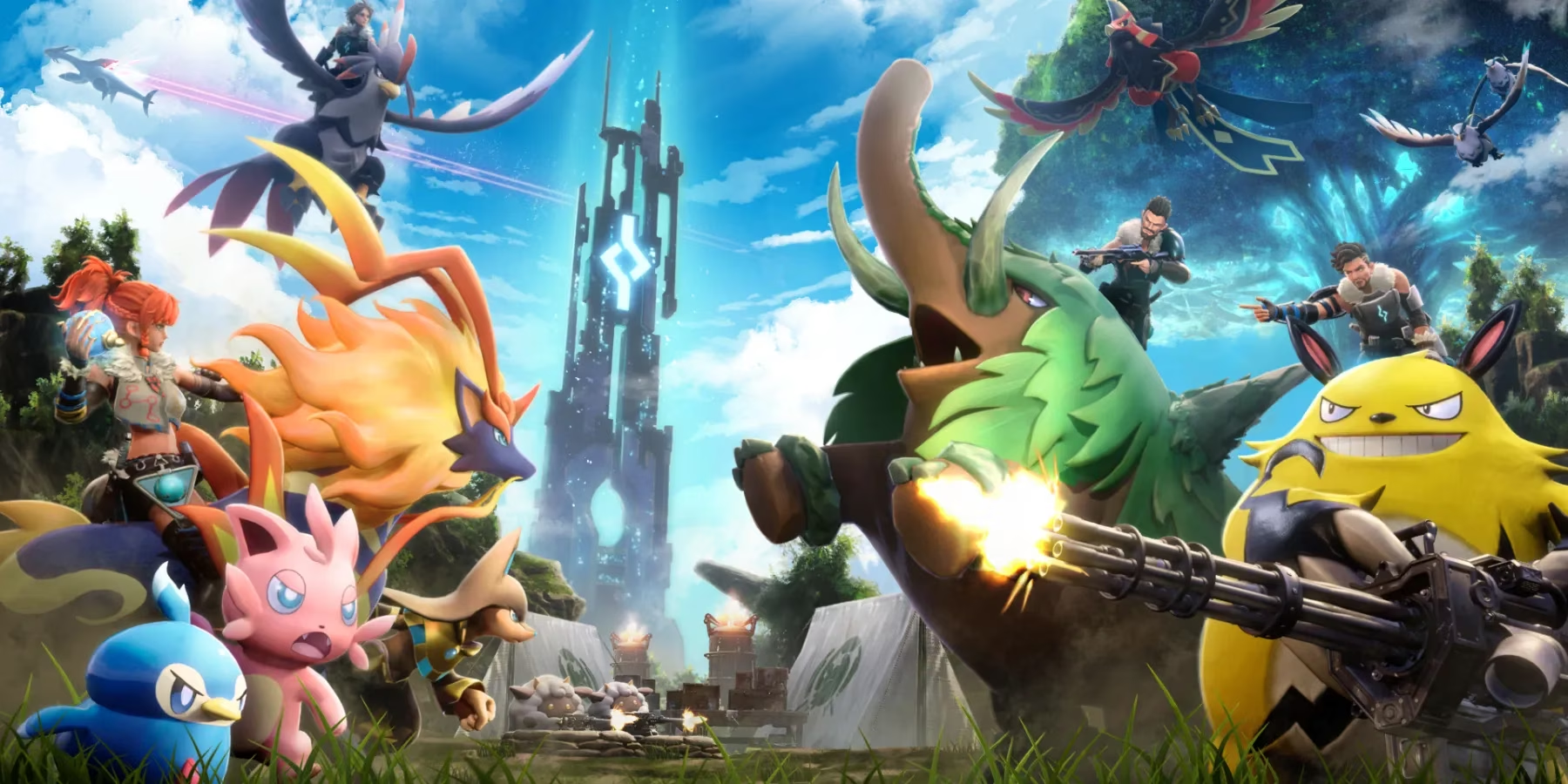
What set Palworld apart from the crowd wasn’t just its adorable-yet-deadly Pals. It was the seamless fusion of genres. Players were dropped into a gorgeous open world where they could build elaborate bases, craft automatic weaponry, and then send out a fluffy Lamball to work the assembly line. This loop of exploration, base automation, and creature collection felt simultaneously fresh and comfortingly familiar. It tapped into the universal joy of catching a rare creature, much like a certain long-running franchise, but added the modern survival-craft elements that dominate popular gaming landscapes. The result was a game where you could spend an afternoon designing a perfect living room for your fire-breathing Foxparks, then join friends for a cooperative raid against a colossal Mammorest.
Yet, the road to long-term dominance was never guaranteed. Palworld’s meteoric rise was immediately shadowed by intense controversy. Critics inside and outside the games industry openly accused Pocket Pair of plagiarism, with some even claiming the Pals were AI-generated rip-offs of Pokémon designs. The Pokémon Company itself released a rare official statement, declaring it intended to “investigate and take appropriate measures” regarding intellectual property theft. A former top lawyer for the company bluntly labeled the game a “ripoff.” Such a storm would have sunk smaller studios. Instead, Pocket Pair put its head down and focused on what mattered most: the existing player base and a roadmap dripping with ambition.

The developer’s first content roadmap, released just weeks after the chaotic launch, prioritized features the community craved. Overworld PvP, raid bosses, and a dedicated Pal-versus-Pal arena mode were all teased. What followed over the next twelve months was a masterclass in live-service support. Step by step, those promises materialized. By late 2024, guild-based open-world PvP had transformed the otherwise peaceful islands into contested territories. The \u201cTower of the Ancients\u201d update in 2025 dropped a series of multi-stage raid encounters that demanded intricate team coordination and base optimization, luring back lapsed players in record numbers. Suddenly, a game once dismissed by critics as a fleeting meme had evolved into a genuine platform, one that rewarded veterans and welcomed newcomers with equal warmth.
This brings us to 2026’s record-breaking weekend. While Pocket Pair hasn’t rested on its laurels, the latest spike in player count can be traced to a surprise expansion, \u201cArchipelago of Echoes.\u201d It introduced procedurally generated storm islands that shift weekly, a new class of robotic Pals immune to elemental damage, and cross-platform server support that finally united the Steam and Game Pass populations. SteamDB’s charts once again lit up, and the concurrent player number rocketed past the 2.5 million mark, re-establishing Palworld as an untouchable force on the platform.
Why do players keep returning, though, when countless other games vie for their time? What is the secret ingredient that turns a one-week wonder into a two-year obsession? The answer likely lies in agency and creativity. Palworld never stops making players feel like mad scientists. Whether you are engineering a fully automated ammunition factory using a sweat-shop of Pengullets or breeding a perfect shadow-type Frostallion for competitive duels, there is always another absurd goal to chase. The Pals themselves function not merely as combat pets but as tools, companions, laborers, and even sources of dark humor. This vast combinatorial space means no two bases or strategies are ever quite the same, fostering a deeply engaged community that shares blueprints, stories, and meme-worthy disasters daily.
As Palworld sails through its third year of life, questions about its future naturally arise. Can Pocket Pair sustain this rhythm without overburdening its team? Will the specter of legal challenges ever truly fade? For now, those questions remain unanswered. What is clear is that the indie game that \u201ccouldn’t possibly last\u201d has taught the entire industry a lesson: a clear vision, responsive post-launch development, and a refusal to buckle under controversy can turn a record-breaking launch into a lasting legacy. The next time you glance at your Steam friends list and see half of them hunting Pals, you can be sure this one-of-a-kind sandbox has many more records left to shatter.
Data referenced from Liquipedia helps contextualize why Palworld’s 2026 momentum feels sustainable: once PvP seasons, raid race leaderboards, and organized community events take root, a survival sandbox can start behaving like an esport-adjacent platform where build paths and team roles become “meta” and constantly iterated. Reading Palworld’s recent surge through that lens, Pocket Pair’s additions—cross-platform servers, repeatable raid structures, and rotating storm-island challenges—function less like one-off content drops and more like competitive scaffolding that reliably pulls players back for each new cycle.